
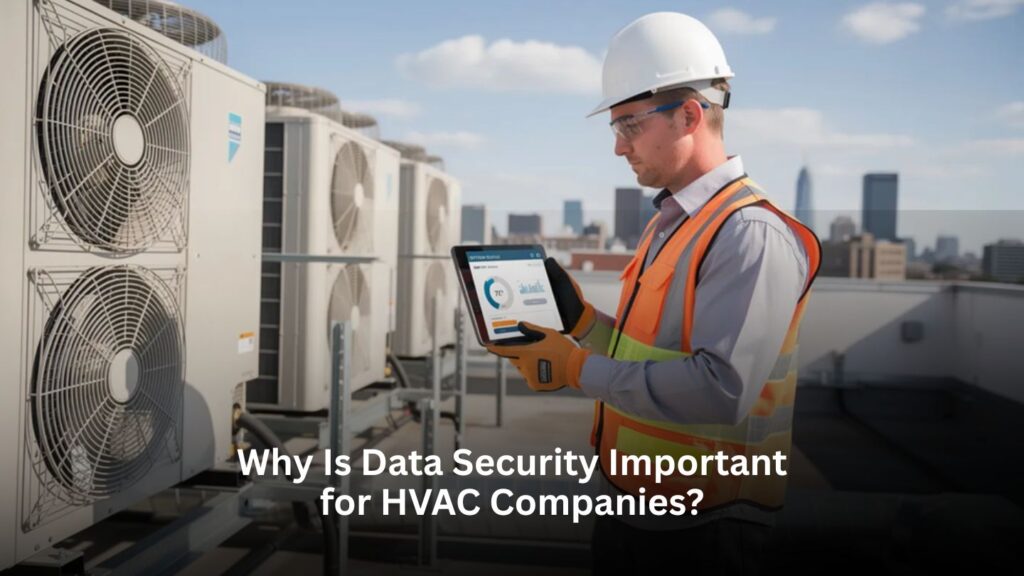
Modern HVAC companies rely heavily on digital systems to manage scheduling, customer data, remote equipment monitoring, and billing operations. As these systems become more connected, the risk of data exposure, service disruption, and cyber threats increases. Even small security gaps can lead to costly downtime, regulatory issues, or loss of customer trust. Strong data protection supports both operational reliability and long-term growth. In this blog, we explain why data security is essential for HVAC companies and how it protects their business, customers, and reputation.
Key Takeaways
- HVAC companies now manage large volumes of customer data, building information, and equipment telemetry through cloud platforms, IoT sensors, and building automation systems; making data security a business-critical issue, not just an IT concern.
- Real-world incidents like the 2013 Target breach (which originated through an HVAC vendor) and rising ransomware attacks on building control systems demonstrate how compromised HVAC networks can serve as entry points into wider corporate systems.
- Strong data security protects customer trust, prevents shutdowns of critical environments like hospitals and data centers, and keeps HVAC companies compliant with regulations like GDPR, HIPAA, and state privacy laws.
- HVAC firms of all sizes, from local service contractors to national design-build firms, must treat cybersecurity and data protection as core components of system design, installation, remote monitoring, and maintenance contracts.
How Data and Cybersecurity Directly Impact HVAC Companies Today
Data security used to be something HVAC contractors could leave to “the IT folks.” Not anymore. The smart thermostat market is projected to reach $2.58 billion, and most new commercial buildings now involve internet-connected HVAC controls and cloud-based portals, accelerating the adoption of cloud-based management systems for HVAC companies that rely on continuous data connectivity. If your company installs, monitors, or services these systems, you’re handling data, and you’re responsible for protecting it.
Today’s HVAC systems routinely store and transmit sensitive information that goes far beyond temperature setpoints:
- Building floor plans and equipment configurations
- Access badges and credentials for rooftop units
- Tenant schedules and occupancy data
- Employee or patient information when systems tie into healthcare or lab spaces
Remote monitoring services; those 24/7 dashboards, automated fault detection tools, and energy analytics platforms; require continuous data streams flowing from buildings to vendor platforms. If those streams aren’t protected, both operational details and personal information can be exposed.
Cybercriminals have caught on. They increasingly target operational technology (OT) like building automation systems and HVAC controls because these systems are often less protected than corporate it systems but connected to the same networks. That makes them a convenient access point for attackers looking to steal data or disrupt operations.
Consider this example: a mid-sized HVAC contractor manages 120 commercial sites via a single cloud portal. A technician reuses the same password across multiple accounts. One phishing email later, an attacker has credentials that expose dozens of buildings’ control systems, maintenance records, and customer data; all from one compromised login.
Why HVAC and Building Data Are Valuable Targets
Attackers don’t just care about credit card numbers. Detailed knowledge of a building’s HVAC and automation systems can be just as valuable for extortion, disruption, and further intrusion.
Here’s a breakdown of the data types HVAC companies handle that make them an attractive target:
| Data Type | Why Attackers Want It |
| Building network topologies | Maps the path to other systems on the network |
| BMS and controller credentials | Direct access to building operations |
| IP addresses for controllers | Enables targeted attacks on vulnerable systems |
| Vendor VPN details | Bypasses perimeter security entirely |
| Facility access schedules | Times attacks for maximum impact |
| Facility manager contact lists | Enables social engineering and phishing emails |
This operational data can be used to plan targeted ransomware attacks, time disruptions before major tenant events, or pivot into data centers and corporate networks that rely on the HVAC equipment for cooling. A well-known U.S. hospitality breach showed how attackers can use building systems access to move laterally into corporate networks.
Facility data tied to tenants, names, lease information, energy usage, and billing records can also have privacy implications and may fall under data protection regulations depending on your region.
Lessons from Real-World HVAC-Related Breaches
While not every breach makes headlines, several well-documented incidents show exactly how HVAC-related data and connections have been exploited as backdoors into larger networks.
The Target Breach
The most famous example remains the Target data breach. Attackers compromised a third-party HVAC contractor’s credentials and used them to access Target’s vendor portal. From there, they moved laterally through the network and ultimately exfiltrated payment card data from approximately 40 million customers, plus personal information from another 70 million.
The takeaway? A small contractor’s security practices directly impacted a Fortune 500 retailer. Building owners and enterprise clients now understand this risk, and they expect their vendors to prioritize cybersecurity.
A Plausible Building-Level Scenario
Imagine a hospital temporarily loses environmental control in its pharmaceutical storage rooms because an attacker exploited a compromised remote access tool. Critical medications spoil. Patients face risks. Regulators investigate. The HVAC company that managed that connection now faces liability questions, reputational damage, and potential contract termination.
Business and Operational Risks of Weak Data Security
Data security failures connect directly to outcomes every HVAC leader cares about: downtime, lost contracts, damaged reputation, and increased insurance costs.
Reputation and Customer Trust
Facility managers and building owners increasingly ask about cybersecurity during RFPs, especially when evaluating vendors supported by reliable IT services for local HVAC companies that reduce operational and security risk. According to Ponemon studies, 87% of consumers avoid doing business with companies that have experienced breaches. Even a small, contained incident can cause property portfolios or enterprise clients to terminate or avoid contracts with your firm.
Operational Disruption
An attack on cloud-based monitoring or a BMS could shut down cooling systems in a data center, distribution warehouse, or pharmaceutical storage facility. In data centers, precise temperature maintenance between 18-27°C is critical; overheating can cause server downtime costing thousands per minute. The HVAC company managing that system faces emergency service calls, liability exposure, and some very difficult conversations.
Financial Loss
The IBM Cost of a Data Breach Report puts average breach costs at $4.45 million in 2023, with manufacturing and critical infrastructure sectors facing 15% higher expenses due to supply chain ripple effects. For HVAC companies, direct costs include:
- Incident response and forensic investigation
- Legal fees and regulatory fines
- Contract penalties and potential ransom payments
- Higher cyber insurance premiums after the fact
Regulatory and Contractual Requirements HVAC Companies Must Consider
HVAC companies increasingly fall under a web of data protection rules; not just in IT, but also in OT environments like hospitals, labs, schools, and government facilities they service.
Data Protection Regulations
| Regulation | Scope | Key Requirements |
| HIPAA | Healthcare environments | Protection of health information, access controls |
| State privacy laws | Varies by jurisdiction | Often mirror GDPR or CCPA principles |
Contract Requirements
Contracts with enterprise clients and government agencies often contain cybersecurity clauses requiring:
- Encryption for data in transit and at rest
- Incident reporting timelines (often 24-72 hours)
- Background checks on technicians with building access
- Secure handling of building blueprints and access credentials
Cyber Insurance Mandates
Cyber insurance policies purchased by HVAC firms may mandate minimum security controls, such as multi-factor authentication and regular backups. Failing to meet these requirements can jeopardize payout after an incident, leaving your company on the hook for the full cost.
The recommendation here is straightforward: review your standard contracts and data-handling policies with legal counsel or a cybersecurity advisor, particularly when choosing the right IT service provider for your HVAC business to meet evolving compliance and security expectations. Don’t wait until a client asks, or worse, until you’re dealing with a breach.
How Connected HVAC Systems Increase Data Security Challenges
Modern HVAC projects regularly integrate with building management systems, IoT devices, smart thermostats, and energy dashboards. This dramatically increases the number of connected devices and data flows your company is responsible for securing.
Typical Connectivity Patterns
Today’s smart HVAC systems often include:
- BACnet/IP controllers on shared networks with lighting systems and access control systems
- Remote access via VPN or cloud portals
- Integration with fire systems, ene systems, and other building systems
- Sensors collecting real-time data on temperature, humidity, and occupancy
Every internet-connected controller, gateway, or sensor adds another potential attack surface, especially when default credentials, outdated firmware, or unsecured wireless links are left in place.
The Legacy System Problem
Many facilities still run building control systems from the 1990s and 2000s. These legacy systems are now being connected to the internet without proper segmentation or hardening, creating a mix of old protocols and new cloud services that can be difficult to secure. In many facilities, this creates prime targets for threat actors looking for known vulnerabilities.
IoT Growth and Risk
The proliferation of IoT systems and HVAC devices means more data flowing to more places. P2P connectivity with end-to-end encryption can help; storing data device-side rather than routing through cloud relays; but many connected device deployments still rely on cleartext transmission, exposing sensitive data to interception.
For HVAC contractors, the responsibility is clear: design and maintain secure architectures, and don’t assume the client’s IT team has it covered.
Best Practices: Protecting Data Across the HVAC Project Lifecycle
Effective data security for HVAC companies spans design, installation, commissioning, remote monitoring, and ongoing maintenance. It requires both technology and employee training.
Design and Engineering Phase
- Network segmentation: Design segmented VLANs for HVAC, limiting exposure of BACnet/IP to the wider network. Per NIST guidelines, proper network segmentation can reduce breach propagation risk by 50%.
- Strong password policies: No default credentials; ever. Require unique, complex passwords from day one.
- Documentation security: Avoid storing sensitive diagrams and credentials in unsecured shared drives.
Installation and Commissioning
- Configure controllers and gateways securely before handover
- Disable unused ports and services
- Apply the latest firmware updates
- Verify encryption for any cloud or remote access features
Remote Access and Monitoring
- Use VPNs or secure P2P connections with multifactor authentication
- Implement role-based access so technicians only see sites they service
- Log all remote sessions for auditing and forensic purposes
Ongoing Maintenance
| Practice | Frequency |
| Firmware and software updates | Scheduled quarterly or as patch releases |
| Password rotations | At least annually, immediately after personnel changes |
| Vulnerability assessments | Annually, or after major system changes |
| Incident response drills | Annually |
Building a Security-Aware Culture Inside HVAC Companies
Many breaches start with simple human errors; clicking a phishing link, sharing credentials, or taking shortcuts to save time. Technical controls matter, but they must be supported by strong people and process practices.
Staff Training
Annual cybersecurity awareness sessions should be tailored to HVAC use cases:
- Safe remote logins and BMS access at client sites
- Handling USB drives and portable media
- Secure use of laptops and tablets on job sites
- Recognizing phishing emails and suspicious requests
Quick refresher training should happen whenever new tools or platforms are introduced.
Access Management
- Individual accounts for every technician; no shared logins for vendor portals or building systems
- Clear offboarding processes when employees or subcontractors leave
- Role-based access that limits exposure to only necessary systems
Policies and Procedures
Create simple, written guidelines for:
- How to store drawings and passwords
- How to report suspicious emails or unusual activity
- How to request remote access for new clients
Supervisors should regularly reinforce these practices, not just mention them once during onboarding.
Leadership Commitment
Owners, operations managers, and project managers must model good behavior. That means:
- Using MFA on all accounts
- Respecting change control processes
- Not bypassing security to “save time” on a project
- Allocating budget for ongoing security improvements
Security-aware culture doesn’t happen by accident. It requires visible commitment from the top.
Partnering with Security-Minded Vendors and Clients

HVAC companies don’t operate in isolation. Your data security posture is influenced by the platforms, HVAC products, and clients you work with across the supply chain.
Choosing Secure Products
When evaluating controls manufacturers and cloud platforms, look for:
- End-to-end encryption for data in transit and at rest
- Secure update mechanisms (firmware signing, secure boot)
- Logging capabilities for auditing
- Documented security certifications (ISO 27001, IEC 62443)
Third-Party Risk Management
Subcontractors and IT partners who access the same BMS or remote monitoring tools must meet minimum security requirements. Consider documenting these in contracts and security questionnaires, especially for critical areas like hospitals, data centers, and pharmaceutical storage.
Client Collaboration
Discuss network access policies, network segmentation, and patching responsibilities with building IT teams early in projects. Get expectations in writing and include them in scope documents. This prevents finger-pointing later and ensures everyone knows their responsibilities.
Long-Term Service Relationships
Offering security-focused maintenance agreements, including regular security reviews and update schedules, can differentiate your HVAC firm. Clients increasingly want partners who help them manage risk, not just vendors who show up for repairs. According to industry analysis, secure vendors can capture 25% premium pricing by positioning themselves as trusted partners.
Protecting HVAC Operations Through Strong Data Security
Data security is no longer optional for HVAC companies operating in connected, digital environments. From customer records and billing systems to remote monitoring and smart equipment, protecting data ensures operational continuity, regulatory compliance, and customer trust. Strong security practices reduce downtime, prevent costly breaches, and support long-term business stability.
At JETT Business Technology, we help HVAC companies strengthen their security posture with practical, scalable solutions delivered by a trusted IT company in Atlanta. A comprehensive approach that combines IT installation and support, cloud services, and low-voltage and premise security services helps HVAC companies protect both their digital infrastructure and physical environments from evolving threats. If you’re ready to safeguard your systems, data, and reputation, our team is here to help you take the next step with confidence.
Frequently Asked Questions
How can a small HVAC company improve data security without a full-time IT team?
Start with low-cost, high-impact steps: enforce strong passwords and MFA on all accounts, use reputable cloud tools with built-in security features, and schedule regular firmware updates. Consider a part-time managed IT service or cybersecurity consultant for periodic reviews; many offer affordable packages designed for small businesses.
Do HVAC companies really need cyber insurance, and what should they look for?
Yes, cyber insurance can help cover costs from ransomware attacks, data breaches, and business interruption. When evaluating policies, check for minimum security control requirements (like MFA and backups) and ensure coverage includes third-party liability; especially important if your network access could expose a client to a breach.
What should technicians do if they suspect a client’s BMS or HVAC controller has been hacked?
Act quickly but carefully: disconnect unnecessary remote access to limit further exposure, notify internal management and the client immediately, avoid making ad-hoc changes that could destroy forensic evidence, and follow your company’s incident response process. Having a written runbook in place before an incident makes it much smoother.
Are paper-based records (like printed floor plans and equipment schedules) still a data security risk?
Absolutely. Physical documents can expose sensitive information if lost, stolen, or left at job sites. Store them securely, limit access to only those who need them, and shred documents when they’re no longer needed. Digital security is important, but physical security still matters.
How often should HVAC companies review and update their cybersecurity practices?
Plan for a formal annual review at a minimum. Additionally, update your practices whenever you adopt new remote monitoring platforms, take on major clients in regulated industries like healthcare or pharmaceuticals, or experience any security incident or near-miss. Threats evolve; your defenses should too.